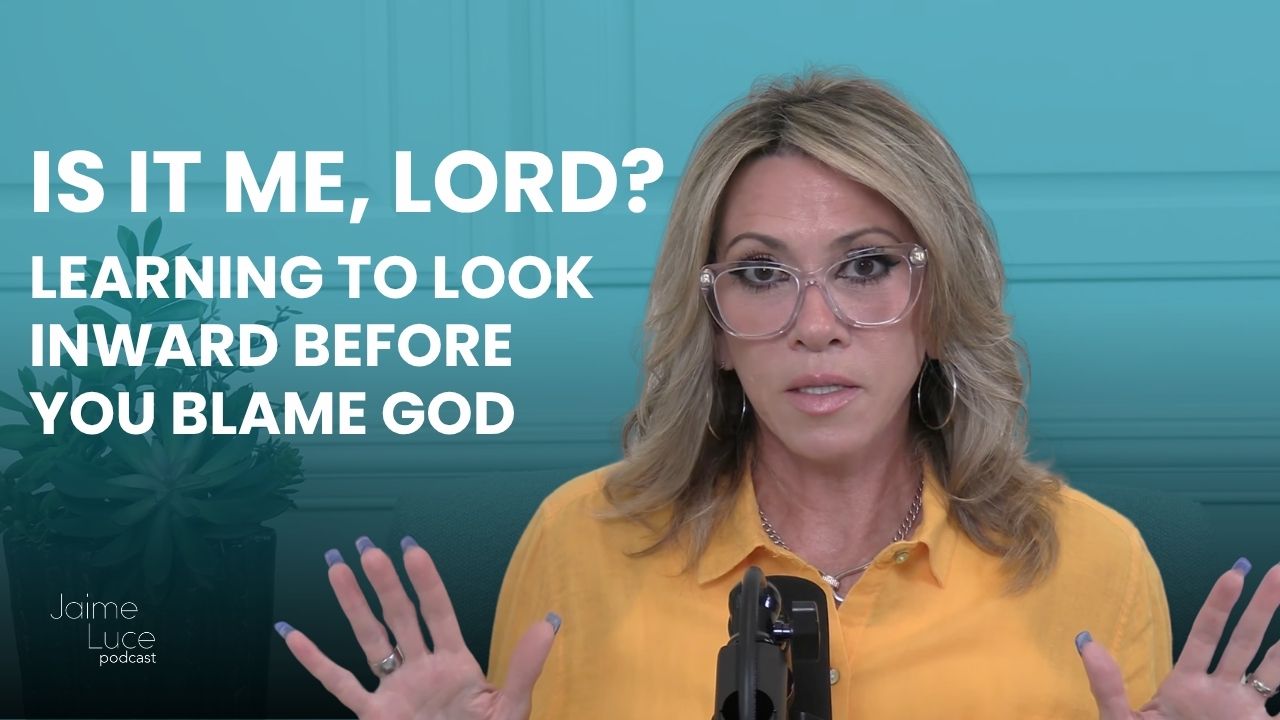
I know that if you’re here, you’re someone who loves digging into the depths of God’s word. Scripture says deep calls unto deep, and today I want to take you into two passages that completely shifted how I think about worship, obedience, and what it really means to walk through hard seasons with God: 2 Samuel 5–6, and the story of Joseph in Genesis 37–40.
Why Do the Best of Times and the Worst of Times Happen at Once?
Have you ever felt like you were living the famous line from A Tale of Two Cities — it was the best of times, it was the worst of times? I think most of us, if not all of us, have been in a season where we’re confused, faith-wise. We’re doing our best to follow God, and yet we’re getting hammered somewhere in life at the very same moment we’re experiencing a victory.
I’ve wrestled with this. Why is this happening? Why do I have to go through this? Did I do something wrong? Did I do something to deserve this?
Why My First Response Should Be “Is It Me, Lord?”
When Jesus told His disciples that one of them would betray Him, their response wasn’t to accuse each other. It was, “Is it me, Lord?” These were men who loved Him, who had walked with Him for three years, and their first instinct was to look inward rather than point fingers.
That’s the posture I want to have when I’m wrestling with something bigger than me. Sometimes the weight is genuinely too heavy to bear. I’ve been under loads before that I simply crumbled under — all I could do was cry out to God. My faith wasn’t strong in those moments; I believed He was there, but I didn’t necessarily believe He was going to answer. That’s where the body of Christ and the Holy Spirit step in, to strengthen us and remind us of what God has already said.
The pursuit should always be the same: what does God say? Not what do I want, not how do I want my life to go, but what is His heart, His plan, His purpose.
What David’s Anointing Teaches Us About Waiting on God’s Promises
In 2 Samuel 5, all the tribes of Israel finally come to David and anoint him king over all Israel — not just Judah, where he’d already been reigning. This moment came after years of David running for his life, being pursued by Saul, and even joining the Philistines just to find a place of safety.
David had already been anointed for this calling long before it was made manifest. That’s an important distinction: you can carry an anointing, you can know God has spoken something over you, and it still may not be fulfilled yet. There’s a preparing ground God takes us through before a promise is fully established in our lives.
That’s why Scripture tells us not to despise small beginnings. Some of us are called to things that will never look like what someone else is doing, that may never be well known, that nobody else may ever even see. Think about people who’ve spent years longing for a child, walking through infertility, miscarriage, and loss, before anyone ever saw them holding that baby in a grocery store. We rarely see what it cost someone to get where they are.
Why God Doesn’t Give Us a Formula to Follow
One of the things I love about walking with God is that He doesn’t hand us a formula — He leads us by His Spirit. When David faced the Philistines a second time, he didn’t assume the same strategy that worked before would work again. He asked God, and God told him something different: don’t go up the way you did last time, circle around and wait for the sound of marching in the mulberry trees.
That’s the nuance of faith. God may tell you to do something one way today and a completely different way tomorrow, even facing the same kind of battle. We need His voice, not just our past experience, to know which way to turn.
What Happened When Uzzah Touched the Ark of God
This is the part of David’s story I really want to sit with. David gathers 30,000 men to bring the Ark of God back to Jerusalem. They put it on a new cart, and the whole procession is worship — music, singing, celebration. Every motivation in that moment looks right. They wanted God’s presence. They wanted to honor Him.
Then the oxen stumble, and a man named Uzzah reaches out his hand to steady the Ark so it won’t fall. God strikes him dead right there.
David was terrified. He was also angry. And here’s what stopped me in my tracks: David got offended that God was offended.
The Difference Between Being Offended By God and Offended For Him
I’ve seen this play out so many times, in churches, among God’s people. The world being offended at God doesn’t surprise me — Jesus told us the world would hate Him and hate us too. But when God’s people get offended at God because God is offended by something they did, that’s backwards.
We have a choice in those moments. We can stay in our pride, convinced we’re right and God is somehow wrong, and lose out on the blessing. Or we can humble ourselves and ask why God is offended in the first place, because He is never arbitrary. Every word He speaks, everything He allows, is intentional.
If we’re going to be angry about anything, we need to be angry about what angers God — not at God for being offended.
Serving God His Way, Not Our Way
After Uzzah’s death, David leaves the Ark at the house of Obed-Edom for three months, and Obed-Edom’s household is blessed because of it. When David hears that, I imagine something in him says, wait, I wanted that blessing. That’s what sends him back to figure out what he got wrong.
The answer was simple: the Ark was never supposed to be carried on a cart. It was meant to be carried on the shoulders of priests. Once David and Israel did it the way God actually commanded, David danced before the Lord with all his might, and the blessing that had been missing was back.
We can build entire worship services and ministries that look and sound exactly right on the outside — and still miss the blessing of God, because we’re doing it our way instead of His.
How Jesus’ Cross Shows Us Victory and Suffering Can Coexist
There’s a picture of this same tension in the life of Jesus. At the very moment He was securing victory over death, hell, and the grave — the very moment the promise from the beginning of Scripture was being fulfilled — His flesh was being crucified. His disciples were grieving. His mother was grieving. Victory and death were happening at the exact same time.
That’s something I want you to hold onto: God still loves you, and He is still working His plan, even when that plan includes sacrifice, pain, loss, or a battle you didn’t expect.
Why Joseph’s Prison Was Actually God’s Favor
Genesis 37–40 tells the story of Joseph, a young man given prophetic dreams by God — dreams his own brothers hated him for. They sold him into slavery. He ended up in Potiphar’s house, was falsely accused, and thrown into prison for a crime he never committed.
And yet Scripture describes what happened to Joseph as favor. It was the favor of God that put him in Potiphar’s house. It was the favor of God that led him to prison. It wasn’t punishment — it was God building a platform. Joseph’s calling was to save an entire nation from famine, and the very trials that looked like the worst of times were actually positioning him for it.
Joseph never stopped caring about his relationship with God through any of it. He didn’t sleep with Potiphar’s wife because he cared what it would do to his relationship with the Lord. He cared about not offending God, even in the middle of undeserved suffering.
A Prayer If You’re Wrestling With God Today
Whatever you’re walking through, I want to encourage you to take it to the Lord in prayer.
Father, I thank You for Your word, for the truth of Your word, and for the power of Your word. Today, help me to look inward and ask, “Is it me, God?” Show me if I am not offended by what offends You. Help me be upset by what upsets You, so that my heart is set on pleasing You and living according to Your ways — desiring to do things Your way, not my own.
Yes, I want Your presence. Yes, I want You with me. Yes, I want closeness and relationship with You. I want to hear You and talk to You. I want to receive instruction from You, help from You, and blessing from You, God. I want to live my life according to Your will and Your way.
Strengthen Your people today. For every person reading this, I am asking for the revelation of Your power and Your purpose in their lives, even in their suffering — that they would understand You are standing right there with them, that You will not let their foot be moved, that You will carry them and see them through, and that the victory and the dream You have promised them will come to pass. Your favor is with them. Regardless of how it looks on the outside, it is Your favor, and You are carrying them to the promise.
Father, we give You all the glory for what You have done. In Jesus’ name we pray. Amen.
Where to dive in:
00:00 — Welcome and episode overview
02:16 — Wrestling with God in the “best of times, worst of times”
08:07 — David is anointed king over all Israel, and carrying a promise before it’s fulfilled
20:06 — David conquers Jerusalem and becomes the City of David
24:32 — David sets out to bring up the Ark of God
28:48 — Uzzah reaches out to steady the Ark and is struck down
32:14 — The turning point: “David got offended that God was offended”
37:22 — Getting it right: the Ark carried on the shoulders of priests
42:00 — Victory and the cross: Jesus’ triumph and suffering, side by side
44:37 — Joseph’s story: favor that looked like slavery and prison, and closing thoughts